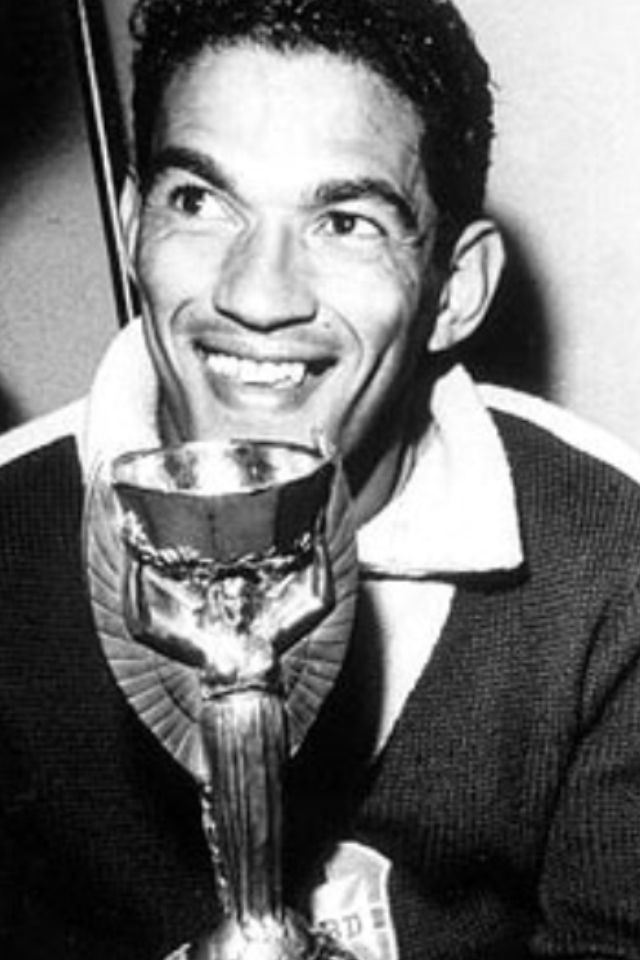
Manuel Francisco dos Santos earned the nickname “Garrincha”—which means “little wren” in Portuguese—during his childhood in Pau Grande, Brazil. The name was inspired by a small, agile bird native to the region, known for its quick, unpredictable movements – much like the way he would later dribble past defenders on the pitch. The “Mané” part is a common Brazilian diminutive for “Manuel”, often used affectionately. So “Mané Garrincha” means “Little Wren Manuel” – a fitting name for a player whose joyful, darting runs brought magic to Brazilian football.
Garrincha’s story is remarkable because he was born with a disability of distorted legs. His right leg was 6 centimetres shorter than his left; also, his left leg turned outwards and his right turned inwards, leading one doctor to certify him as crippled as a child. Yet, he rose to the status of a footballing legend.
Despite having a disability, his football skills were commendable. He was the local team’s star player, and it was not long before he attracted the attention of big clubs. After rejections from many clubs, Garrincha arrived at Botafogo’s training ground for the trial. He was immediately put up against the Brazilian national team left back Nilton Santos. Garrincha dribbled past him. Nilton Santos was so impressed with the young Garrincha, he asked that Botafogo sign him.
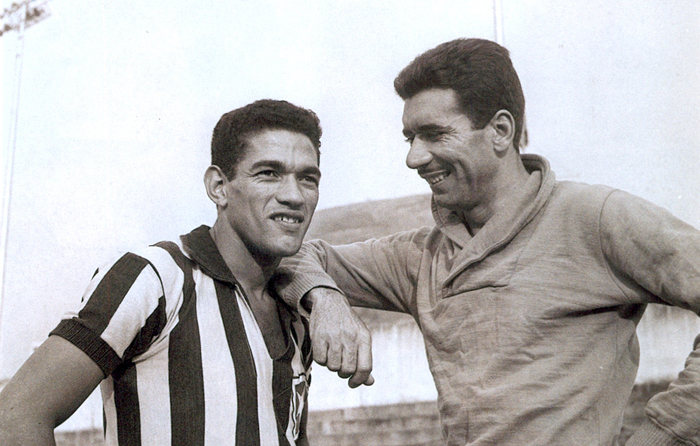
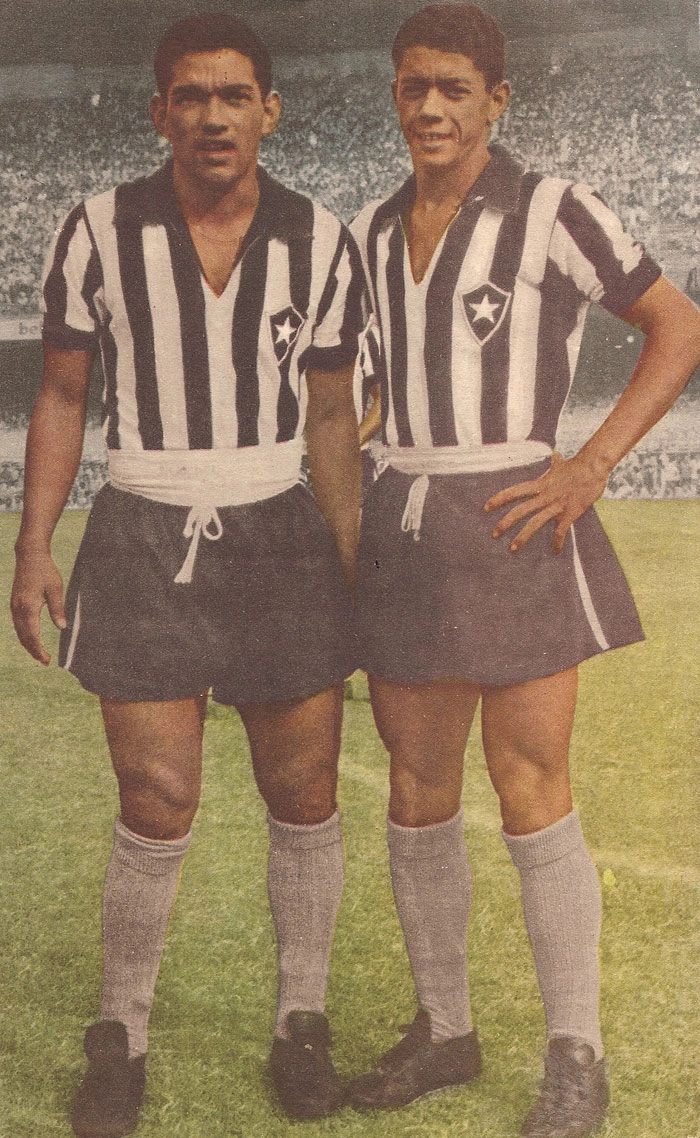
At Botafogo, Garrincha was a phenomenon. He played with innocence and carelessness, delight and brilliance. His teammates referred to him as the dressing room joker because he was not serious. However, supporters were drawn to his passion for entertaining. He went as far as to transcend the local rivalries between teams in Rio. Garrincha’s footballing style established Botafogo as Brazil’s top team at the time, winning several championships. They grew even stronger in 1958, when they added a brilliant young player named Amarildo to their lineup.
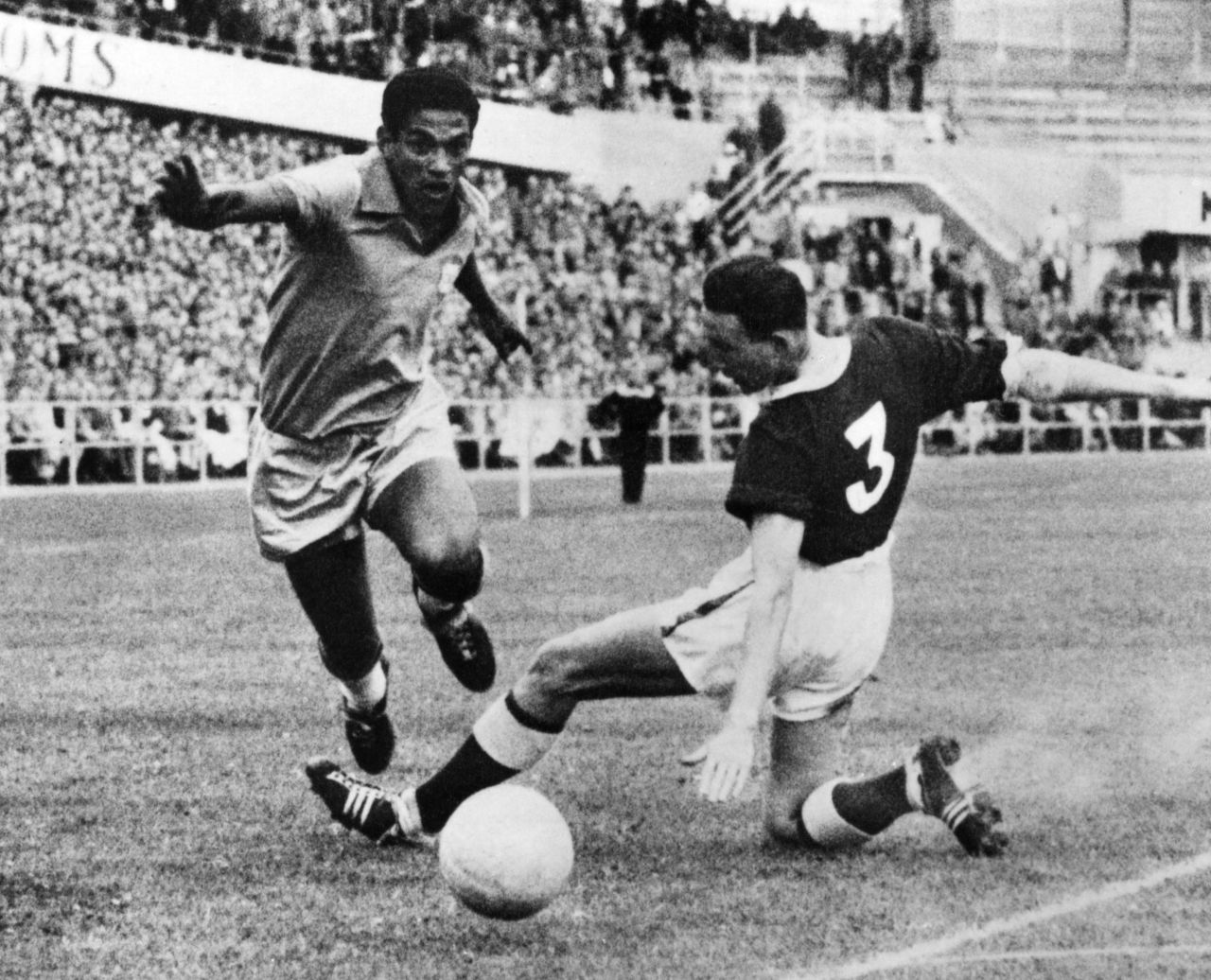
Garrincha represented Brazil in the 1958 FIFA World Cup held in Sweden. He was left out of the first two games of the 1958 World Cup. In the match against the USSR, Brazil feared the scientific football pioneered by the Soviet Union. Hence, Brazil coach Vicente Feola fielded 2 young stars – Pelé and Garrincha. Both youngsters made an immediate impact, but Garrincha’s performance was mesmerising. His close control, dribbling and mazey running had the opposition tied in knots. The Soviets lost 2-0, but in that match, the whole world witnessed the emergence of a new power in football.

In the final match of the World Cup against Sweden, Garrincha was so dominant with his dribbling that he was able to make runs, passing the Swedish defence with ease. This helped in assisting Vava, Brazil’s main striker, to score goals and give Brazil a 5-2 win against Sweden to win the World Cup.
With continuous success for club and country, the trappings of fame were inevitable. Garrincha’s father was an alcoholic and he picked up this bad habit from his father. He was also linked with multiple love interests and had a very casual approach.
Garrincha’s finest hour came in the 1962 FIFA World Cup held in Chile. His magical displays and four crucial goals won him the Player of the Tournament award. Brazil were dealt a severe blow early in their campaign as Pelé got injured.

But Garrincha handled the attack for the Brazilian national team very well. He helped Brazil reach the top of their first-round group.

In their final group 3 match against Spain, Garrincha set up the winning goal with a devastating run. He rushed past 2 defenders to set up a perfect cross for a header by Amarildo for a 2-1 win.
In the quarter-finals against England, Garrincha showed his talent and brilliance. He scored a thumping header from a corner in the 31st minute. Jerry Hitchens equalised for England. In the 53rd minute, Vava scored a header from a rebound of Garrincha’s powerful free kick. Garrincha scored the final goal of the match 6 minutes later. He secured Brazil a 3-1 win.

The semi-final was held in Estadio Nacional Santiago, between defending champions Brazil and host Chile. Garrincha scored the opening goal of the match in the 9th minute with a left-footed strike. He then scored a header in the 32nd minute with a corner from Zagallo. Brazil won the match 4-2 and progressed to the final against Czechoslovakia.
The Europeans scored the opening goals, with Masopust finding the back of the net in the 15th minute. Amarildo equalised in the 17th minute for the South Americans. In the second half, Zito gave Brazil the lead in the 69th minute, and Vavá sealed the victory in the 78th minute following an error from the Czech goalkeeper, Viliam Schrojf. Brazil won the final 3-1 to retain their crown, with Garrincha being the undoubted star of the tournament.

Back at home, Garrincha was scoring goals for Botafogo, but things were about to take a drastic downturn. Garrincha’s carefree life was catching up with him. His personal life was facing turmoil in 1961 after his affair with singer Elsa Suarez was revealed and the couple was vilified. His professional career also suffered due to a long-term knee injury from which he never truly recovered. Garrincha’s drinking also started spiralling out of control.
The call for participation in the 1966 World Cup was more of a political decision of the military dictatorship. The government wanted the heroes of the 1958 and 1962 World Cups to represent Brazil. But Garrincha was overweight and out of shape for the 1966 World Cup.
Garrincha’s last appearance was in the 1966 World Cup in England. Brazil had a wonderful start with a 2-0 victory against Bulgaria. Pele scored in the first half and Garrincha in the second. But Brazil lost the remaining group matches and exited the tournament prematurely. Remarkably, the loss against Hungary was Garrincha’s only defeat in 50 appearances for Brazil. His 50th appearance was also his last one because his knee was finished.
After retiring from football, he developed several health issues and left for his heavenly abode on January 20th, 1983, at the young age of 49 due to cirrhosis of the liver.
And it’s here we bid adieu to Garrincha – Brazil’s little bird who flew past defenders and into football folklore.
To summarise, his story is one of joy and tragedy, brilliance and vulnerability, but above all, it’s a reminder that football is meant to be played with a smile. On his birthday, we don’t just remember the goals or the trophies; we remember the laughter, the dribbles, and the way he made the beautiful game truly beautiful.
 Blogging Geek